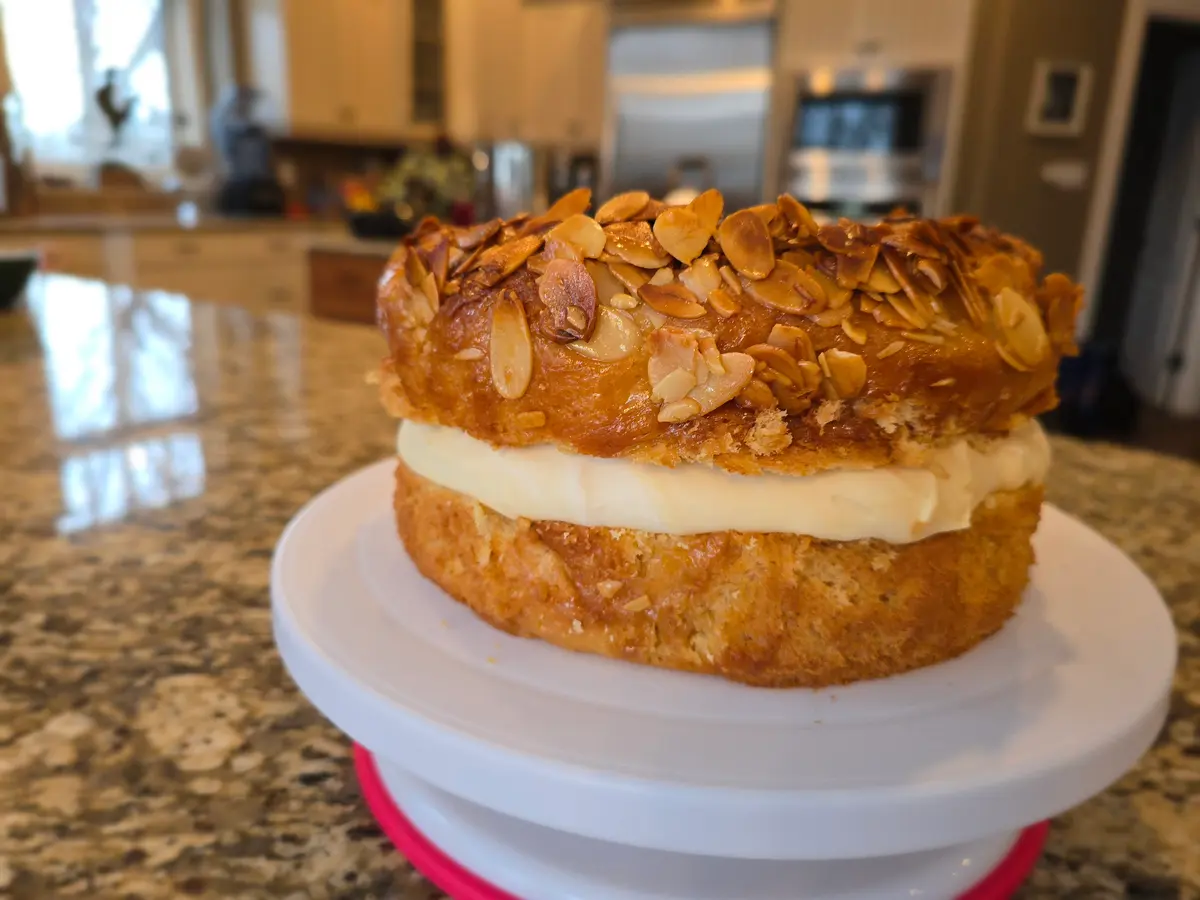
The Best Bee Sting Cake (Bienenstich) Recipe
A Perfectly Balanced, Bakery-Level Dessert for the Home Kitchen This is Not an Easy Recipe. I want to start with that upfront because Bienenstich (Bee Sting Cake) is not a beginner-friendly bake. This
How We Make It Perfect (A 2-Day Process)
This is a precision-based bake, but by breaking it into two days, we make it achievable and straightforward.
Day 1: We make the brioche dough and let it cold ferment overnight for depth of flavor and easy handling.
Day 2: We shape, proof, bake, and layer the cake with custard and caramelized almonds.
Every component is carefully constructed for optimal texture and stability.
Final Thoughts: This is THE Bee Sting Cake to Make
If you've ever had a disappointing Bee Sting Cake, I promise—this recipe fixes all of it.
Perfect brioche structureSilky, stabilized pastry creamCaramelized almond topping done right
If you follow the process precisely, you'll create the most heavenly Bienenstich you've ever tasted.
Trust the method. Trust the science. Then take that first bite—and fall in love.
A Brief History of Bee Sting Cake (Bienenstich)
Bee Sting Cake, or Bienenstich, is a traditional German dessert with a fascinating origin story. Though the exact details are debated, legend has it that the cake dates back to the 15th century when German bakers successfully defended their village from an attack by throwing beehives at invaders. To celebrate their victory, they created a new dessert—one with a sweet, honey-infused almond topping that resembles the golden hues of a beehive.
Historically, Bienenstich has been a staple in German bakeries, often enjoyed as an afternoon treat alongside coffee. Unlike typical cakes, it leans more towards a pastry-like brioche base, setting it apart from other cream-filled desserts. The combination of light, airy bread, caramelized almonds, and rich custard makes it a unique cross between a cake, a cream-filled donut, and a pastry, making it as special today as it was centuries ago.
Bee Sting Cake (Bienenstich) is Bavarian in origin, specifically from southern Germany. While the broader legend of the cake dates back to the 15th century, its true roots are in Bavarian baking traditions, where it became a staple in German konditoreien (pastry shops).
Bavaria, known for its rich baking heritage, is home to some of the most famous German desserts, including Schwarzwälder Kirschtorte (Black Forest Cake) and Dampfnudeln (sweet steamed dumplings). Bienenstich fits perfectly within this tradition—a yeasted, brioche-like base instead of a sponge cake, a caramelized honey-almond topping, and a luscious cream filling.
Originally, the cake was often served as a festive dessert or celebratory treat, and it remains a beloved classic in both Germany and Austria. Today, variations exist, with some regions using buttercream instead of pastry cream, but the core elements—a light, golden brioche, a crunchy almond crust, and a creamy filling—remain unchanged.
Ingredients
- For the Dough
- 1 recipe The Best Brioche (using a 50/50 mix of bread flour and all-purpose flour for optimal texture)
- For the Pastry Cream Filling
- 1 cup (240 ml) whole milk, divided
- 4 tablespoons (50g) granulated sugar, divided
- 3/4 vanilla bean, seeds scraped (or 1 teaspoon vanilla paste), optional
- 1 pinch kosher salt
- 2 tablespoons (16g) cornstarch
- 2 large egg yolks
- 1 tablespoon (14g) unsalted butter
- 2 teaspoons (10 ml) vanilla extract
- 4 teaspoons (20 ml) water
- 3/4 teaspoon powdered unflavored gelatin
- 3/4 cup (180 ml) cold heavy cream
- 3 tablespoons (23g) powdered sugar
- For the Topping
- 4 tablespoons (57g) unsalted butter (1/2 stick)
- 3 tablespoons (45 ml) honey
- 3 tablespoons (38g) granulated sugar
- 1/4 vanilla bean, seeds scraped (or 1/2 teaspoon vanilla paste), optional
- 1 pinch kosher salt
- 1 cup (100g) sliced almonds
- 1/4 teaspoon (1 ml) almond extract
- 1/2 teaspoon (2.5 ml) vanilla extract
Instructions
Dough
1Day 1: Make the dough. Follow steps 1 through 4 of my Brioche recipe. Instead of refrigerating for the minimum 2 hours, refrigerate it overnight.
- 2
Day 2: Shaping. Remove the dough from the refrigerator and lightly punch it down. Press the cold dough into a greased 8- or 9-inch (20–23 cm) springform pan, smoothing it out evenly. Cover the pan with a damp towel and plastic wrap. Let rise in a warm place until puffed, about 1 to 1½ hours. Preheat the oven to 356°F (180°C). Place a parchment-lined baking tray under the pan to catch drippings.
Topping
3Day 2: Make the topping and bake. In a small saucepan, melt the butter over medium heat. Stir in the honey, sugar, vanilla paste, and salt. Simmer briefly. Stir in the sliced almonds. Remove from heat, stir in the vanilla and almond extracts, then set aside until ready to spread on the dough. Let the topping cool slightly (about 5 minutes) before spreading—this ensures it spreads evenly without sinking into the dough. Once the dough is done rising, spread the prepared topping over the dough. Bake for 21–25 minutes, until the internal temperature reaches 188–190°F (86–88°C) and the top is golden brown. Run a knife around the edges immediately after baking to prevent sticking. Let cool for 20 minutes in the pan, then carefully remove and cool completely on a wire rack. This will take at least 1½ hours.
Pastry Cream Filling
4Make the pastry cream filling. In a medium saucepan, heat ¾ cup (180 ml) milk, 2 tablespoons (25 g) sugar, vanilla paste, and salt until just simmering. In a bowl, whisk the remaining ¼ cup (60 ml) milk with cornstarch, the remaining sugar, and egg yolks until smooth and lightened. Slowly whisk half of the hot milk into the yolk mixture, then return to the saucepan. Cook, whisking constantly, until thickened. Remove from heat, add butter and vanilla extract, and strain through a fine-mesh sieve. Cover with plastic wrap directly on the surface and refrigerate until cool. Bloom the gelatin in water, then melt it in the microwave. Whip the heavy cream and powdered sugar in a stand mixer, gradually incorporating the melted gelatin until stiff peaks form. Beat the chilled pastry cream until smooth, then fold in ⅓ of the whipped cream to lighten it. Then gently fold in the rest of the whipped cream, folding very gently until incorporated.
Assembly
5Assembly. Slice the cake horizontally. Spread the filling onto the bottom layer, then place the top layer over it. Chill the assembled cake in the refrigerator for at least 1 hour before serving. Enjoy your beautifully layered bee sting cake!
FAQ
Did you try this recipe?
Leave a star rating — it helps other cooks find it!
Comments

Looking for more? Explore the full collection — filter by lifestyle, cuisine, or dietary needs.