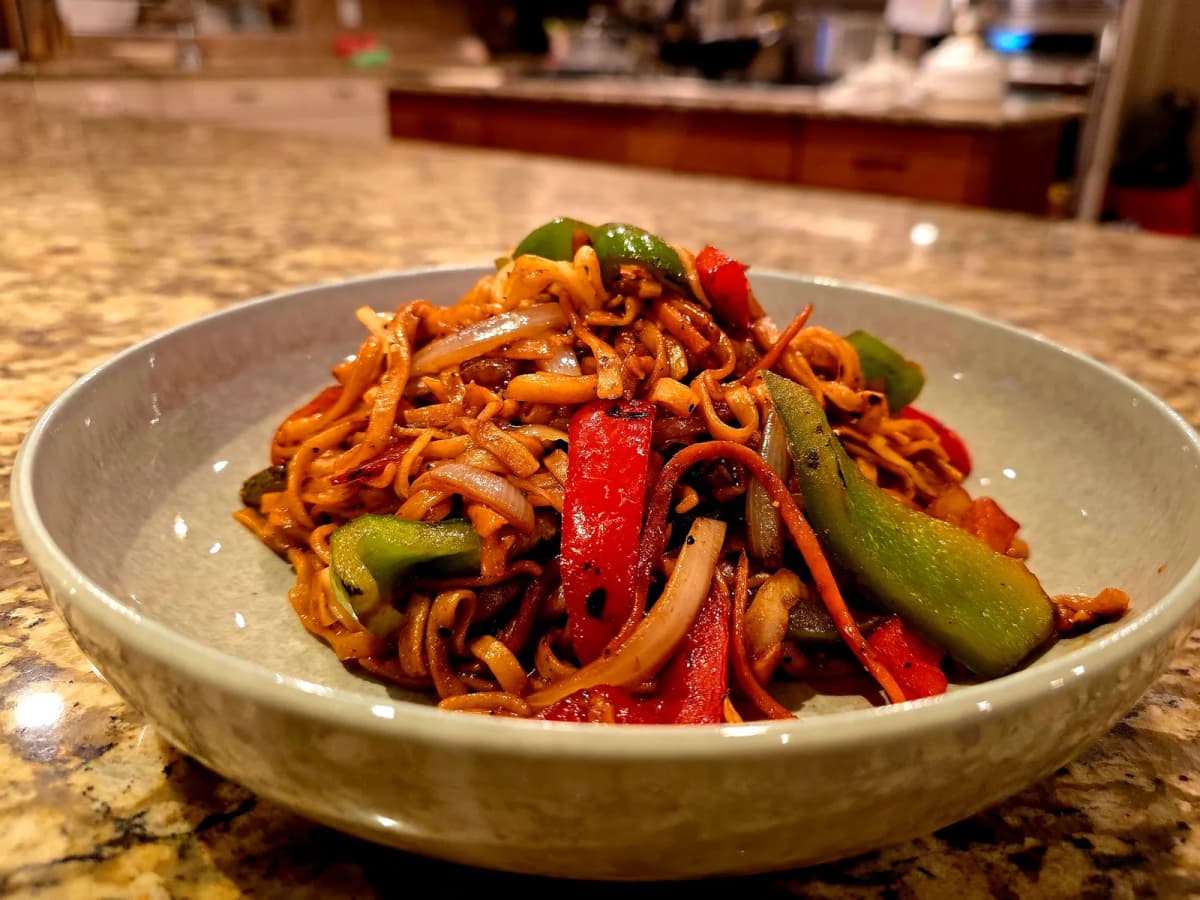
This dark vegetable chow mein is a very dear family favorite that we make constantly. It is an authentic, deeply savory, and intensely satisfying stir-fry that comes together with surprisingly simple techniques. The beautiful dark aesthetic comes from a careful balance of soy sauces, while the fresh vegetables and expertly crisped noodles provide the perfect textural contrast.
It is completely delicious on its own, but feel free to top it with some crispy fried tofu for an extra layer of protein and crunch.
The Noodle Crisping Trick: Wok vs. Skillet: Getting that perfect, restaurant-quality sear on your noodles comes down to heat management. Home stovetops often lack the intense BTUs of commercial wok burners.
The Non-Stick Skillet Trick: If your wok cannot get screaming hot, or if it isn't properly tempered, attempting to sear starches in it will lead to sticking, tearing, and uneven browning. If you are in this camp, use a heavy non-stick skillet for the noodle-crisping step. It is a foolproof way to get an even, golden crust without the frustration.
The Traditional Wok Method: However, if you can get your wok hot enough and it has a beautifully polymerized patina, skip the non-stick skillet entirely. Because we are keeping this as a straight vegetable stir-fry today (omitting heavier proteins like chicken that can crowd the pan and drop the temperature), it is much easier to maintain the necessary heat to sear the noodles directly in the wok.
🍳 Needed Gear
Ingredients
- For the Sauce
- 2 tbsp dark soy sauce
- 3 tbsp light soy sauce
- 3 tbsp oyster sauce
- 3 tbsp Shaoxing wine
- 1½ tsp black pepper, freshly ground
- 1 pinch white pepper
- 2 tsp sugar
- Noodles and Add-ins
- 1 lb fresh chow mein noodles
- 2 cups mung bean sprouts
- 7 cups mixed vegetables, sliced (green and red bell peppers in strips, onion strips, cabbage or coleslaw mix)
- 4 cloves garlic, minced
- 1 piece fresh ginger, 1-inch, minced
- 2 tsp toasted sesame oil, reserved for finishing
- ⅓ cup neutral oil, such as rice bran, peanut, or canola, divided
- salt and pepper, to taste
Instructions
- 1
Prepare Your Sauces
Whisk all the sauce ingredients together in a bowl.
- 2
Prep Noodles and Sprouts
Bring a large pot of water to a boil. Take a wire sieve and put the mung beans into the sieve and then blanch the mung beans in the hot water for 15 seconds in the sieve and then take them out of the hot water and then put them in a bowl. Add the fresh chow mein noodles and boil for 60–90 seconds until just loosened. Drain the noodles and spread the noodle mixture flat on a baking sheet or large platter to cool and dry for a few minutes, preventing clumping. Divide the mixture roughly into two equal portions.
- 3
Stir-Fry the Vegetables
In a large well-seasoned wok or sauté pan, heat 1–2 tbsp of neutral oil over high heat until shimmering. Add the vegetables in batches and stir-fry until tender-crisp, about 2–4 minutes. Remove the vegetables from the pan and set aside.
- 4
Sear the Noodles
The Wok Method: If your wok is properly tempered and screaming hot, add the oil and then the first portion of the noodles and then sear them for 1½ minutes per side, until lightly crisped. Repeat with the second noodle portion. The Non-Stick Method: Heat a heavy non-stick skillet over high heat. Add 1–2 tsp of neutral oil, then press one portion of the cooled noodles into the pan in a flat, even layer and then sear them using the same timing.
- 5
Add the Aromatics
Reduce the heat to medium-high. Make a well in the center of the pan or wok and add the minced garlic and ginger. Stir-fry briefly for 10–15 seconds until highly fragrant.
- 6
Combine Everything
Add the crisped noodles and the cooked vegetables back into the wok. Pour your sauce mixture over the noodles and vegetables, and toss continuously until everything is evenly coated, dark, and heated through, about 1–2 minutes.
- 7
Finish with Sesame Oil
Remove the wok entirely from the heat. Drizzle in the 2 tsp of toasted sesame oil and toss one final time to distribute. Adding this off the heat perfectly preserves the delicate, roasted aroma. Serve immediately, optionally topped with freshly fried tofu.
📝 Ellen's Notes
For the best texture, allow drained noodles to dry on a baking sheet for a few minutes before searing — moisture is the enemy of a good crust. If substituting dried noodles, cook according to package directions and rinse under cold water. Shaoxing wine can be substituted with dry sherry in a pinch. This dish is best served immediately, as the noodles will soften as they sit. Store leftovers in an airtight container in the refrigerator for up to 3 days; reheat in a hot skillet to revive some of the texture.
How to Temper Your Wok:
To successfully use a carbon steel wok for searing noodles, it must be properly tempered (seasoned) to create a non-stick surface. If your wok needs a refresh, follow this quick process:
Scrub and Dry: Wash the wok thoroughly and dry it completely over a medium flame.
Heat to Blue: Turn the heat to high. Move the wok around until the steel begins to change color, often taking on a blue/yellow tint and lightly smoking. Be careful, as it will be very hot at this point.
Oil and Wipe: Remove from the heat. Carefully add a tablespoon of a high-smoke-point neutral oil (like peanut or canola). Using a paper towel held by tongs, wipe the oil aggressively over the entire inside surface until the wok looks dry but glossy.
Repeat: For a newly stripped wok, repeat the heating and oil-wiping process 2 to 3 times until a dark, smooth patina forms.
FAQ
Did you try this recipe?
Leave a star rating — it helps other cooks find it!
Comments
Looking for more? Explore the full collection — filter by lifestyle, cuisine, or dietary needs.