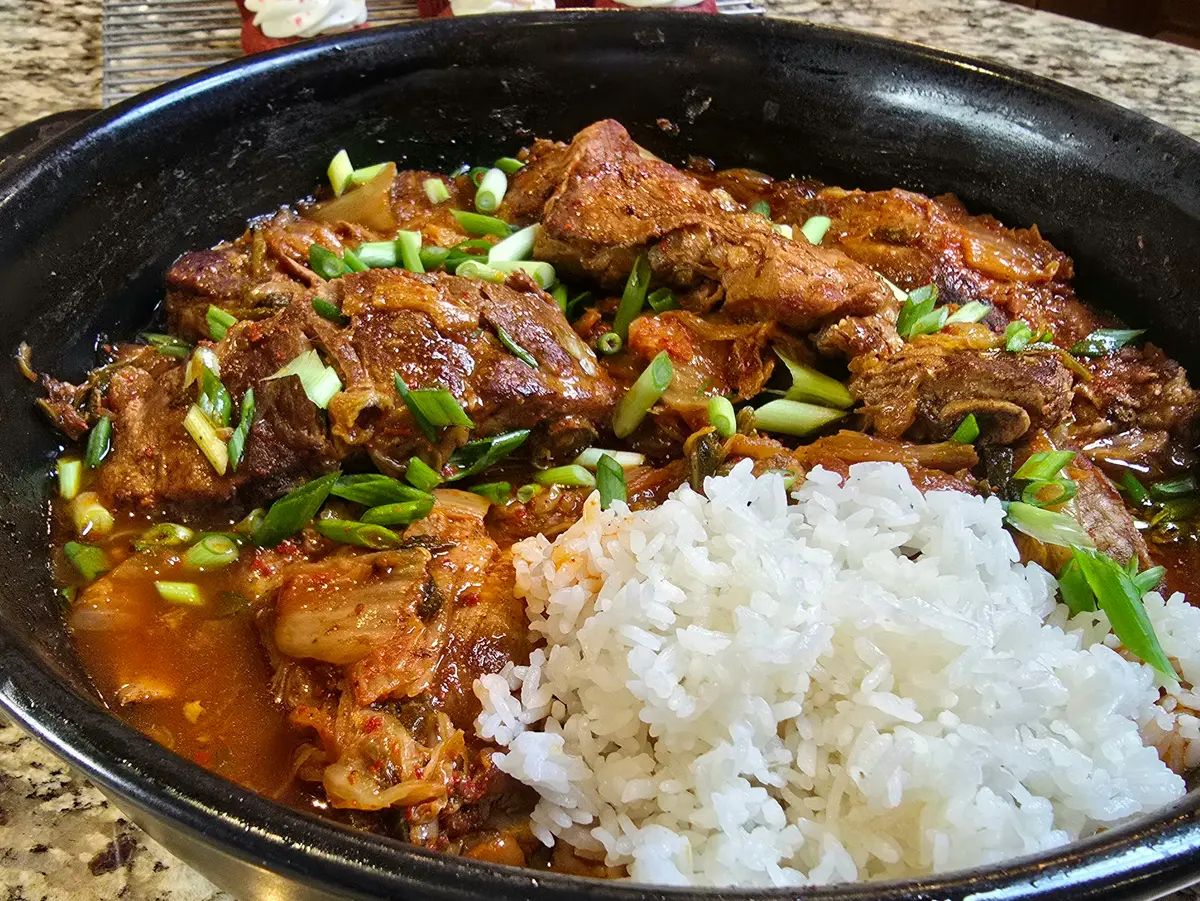
Kimchi Pork Rib Stew (김치찌개, Kimchi Jjigae)
The arrival of Squid Game Season 2 on Boxing Day was the perfect excuse to dive back into the delicious world of Korean food. After binge-watching the entire season in one day (how could we not?), a contestant's mention of kimchi jjigae sent my cravings into overdrive.
Ingredients
- 2–3 lbs (910–1,360g) pork ribs (cut into individual pieces about 3–4 inches long)
- 2 cups (500ml) well-fermented kimchi (chopped into bite-sized pieces)
- 1/2 cup (120ml) kimchi juice (optional, if your kimchi has enough liquid)
- 1 medium onion, chopped
- 4 cloves garlic, minced
- 1–2 teaspoons gochugaru (Korean chili flakes; adjust to spice preference)
- 2 tablespoons soy sauce
- 1 tablespoon gochujang (Korean chili paste)
- 1 tablespoon sesame oil
- 1–2 teaspoons honey (optional, for sweetness)
- 1 block tofu, cut into thick slices (optional)
- 1.5–2 cups (360–480ml) chicken broth (or beef/pork broth for richer flavour)
- 2 bay leaves
- 2 tablespoons olive oil (divided)
- Salt and pepper to taste
- 2–3 scallions, chopped (for garnish)
Instructions
- 1
Preheat the oven to 300°F (150°C). Slice the ribs into individual pieces and pat them dry with paper towels. Season generously with salt and pepper.
- 2
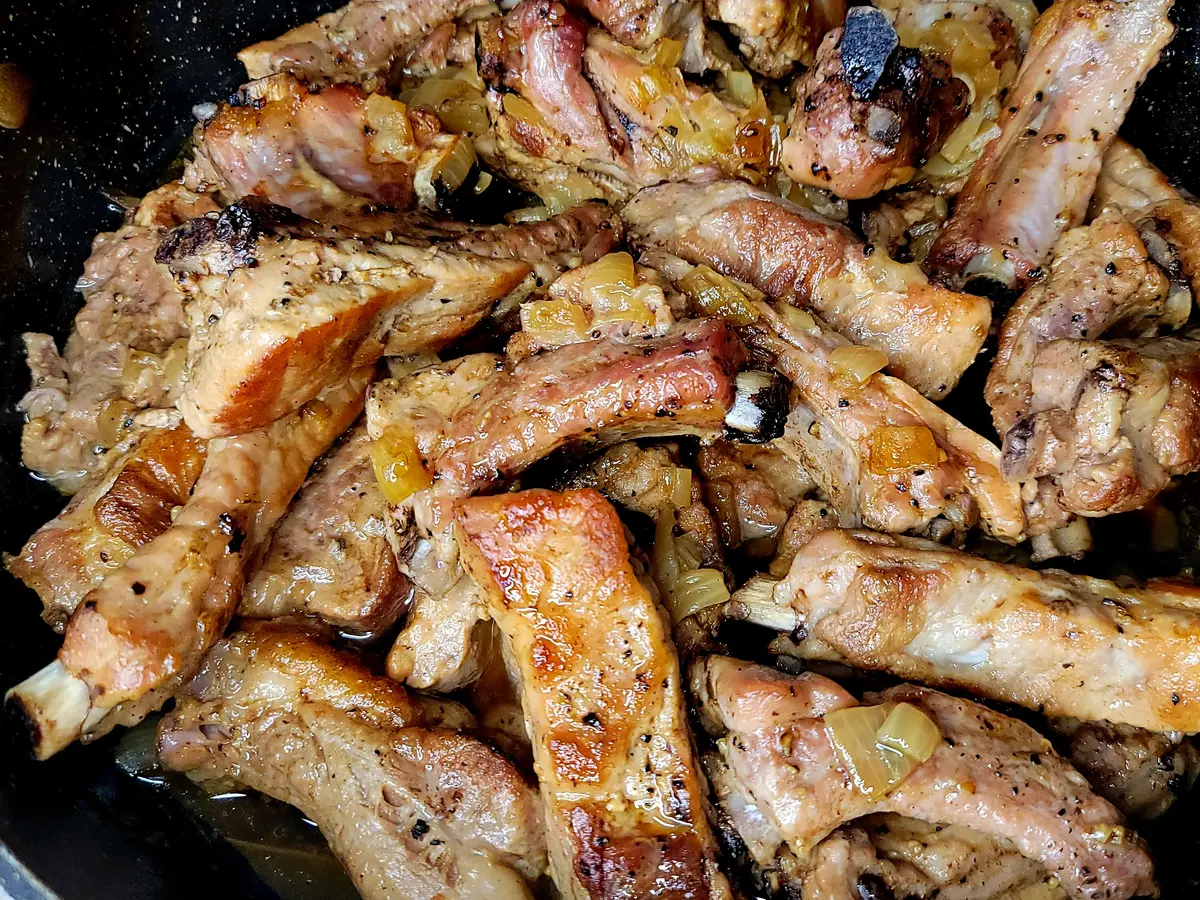
Heat 1 tablespoon (15ml) olive oil in a large Dutch oven over medium heat. Add the chopped onions and cook until softened, about 10 minutes. Remove the onions to a plate and set aside. Increase the heat to high and add the remaining tablespoon (15ml) of olive oil. Brown the ribs in a single layer on all sides (work in batches if needed).
- 3
Return the cooked onions to the pot with the ribs. Add the bay leaves and 1 cup (240ml) of chicken broth (or enough to cover the ribs by about 1/4 inch). Bring the mixture to a boil, cover, and transfer the Dutch oven to the preheated oven. Braise for 1.5 hours.
- 4
After 1.5 hours, carefully remove the pot from the oven. Add the chopped kimchi, kimchi juice (if using), minced garlic, gochugaru, soy sauce, gochujang, and honey. Stir gently to distribute the seasonings. If the liquid level looks low, add a little more broth to maintain moisture (but don't fully submerge the ribs).
- 5
Return the pot to the oven and continue braising for another 30–60 minutes until the ribs are tender and falling off the bone, and the flavours are well combined.
- 6
If using tofu, add the sliced tofu to the pot during the last 10–15 minutes of cooking to warm through and absorb some of the stew's flavour.
- 7
Remove the Dutch oven from the oven. Stir in sesame oil for a nutty aroma. Garnish with chopped scallions and serve hot. This dish pairs beautifully with steamed rice.
FAQ
Did you try this recipe?
Leave a star rating — it helps other cooks find it!
Comments
Looking for more? Explore the full collection — filter by lifestyle, cuisine, or dietary needs.