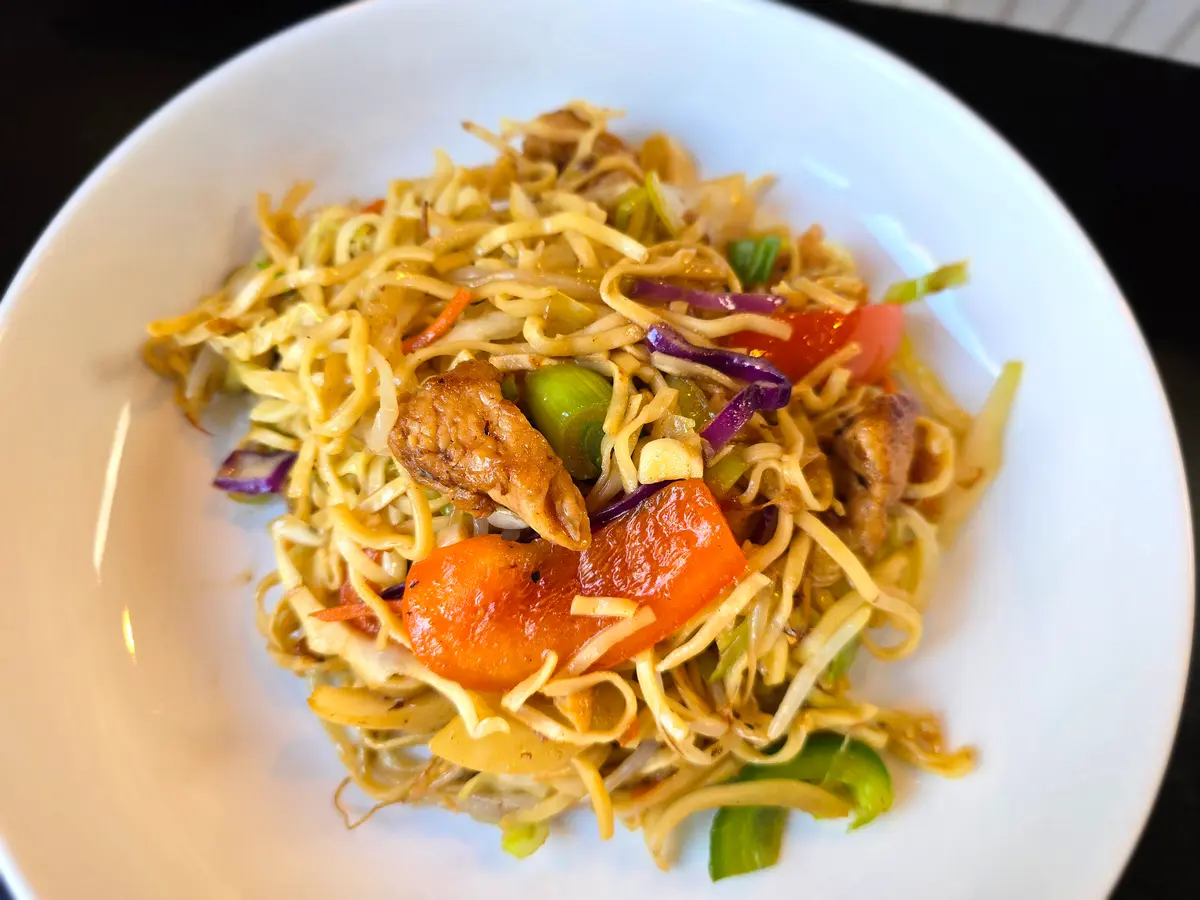
My Family's Chow Mein Recipe (家傳雞肉炒麵)
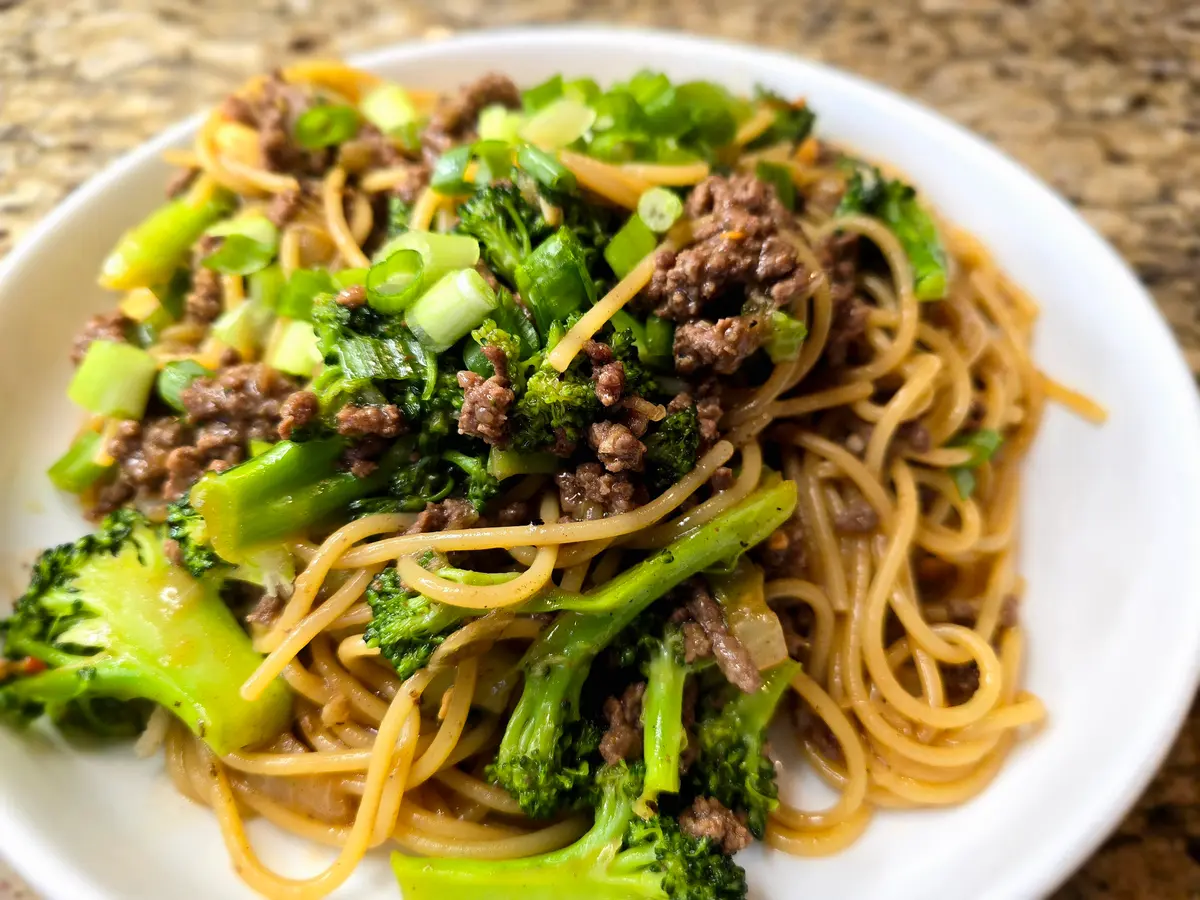
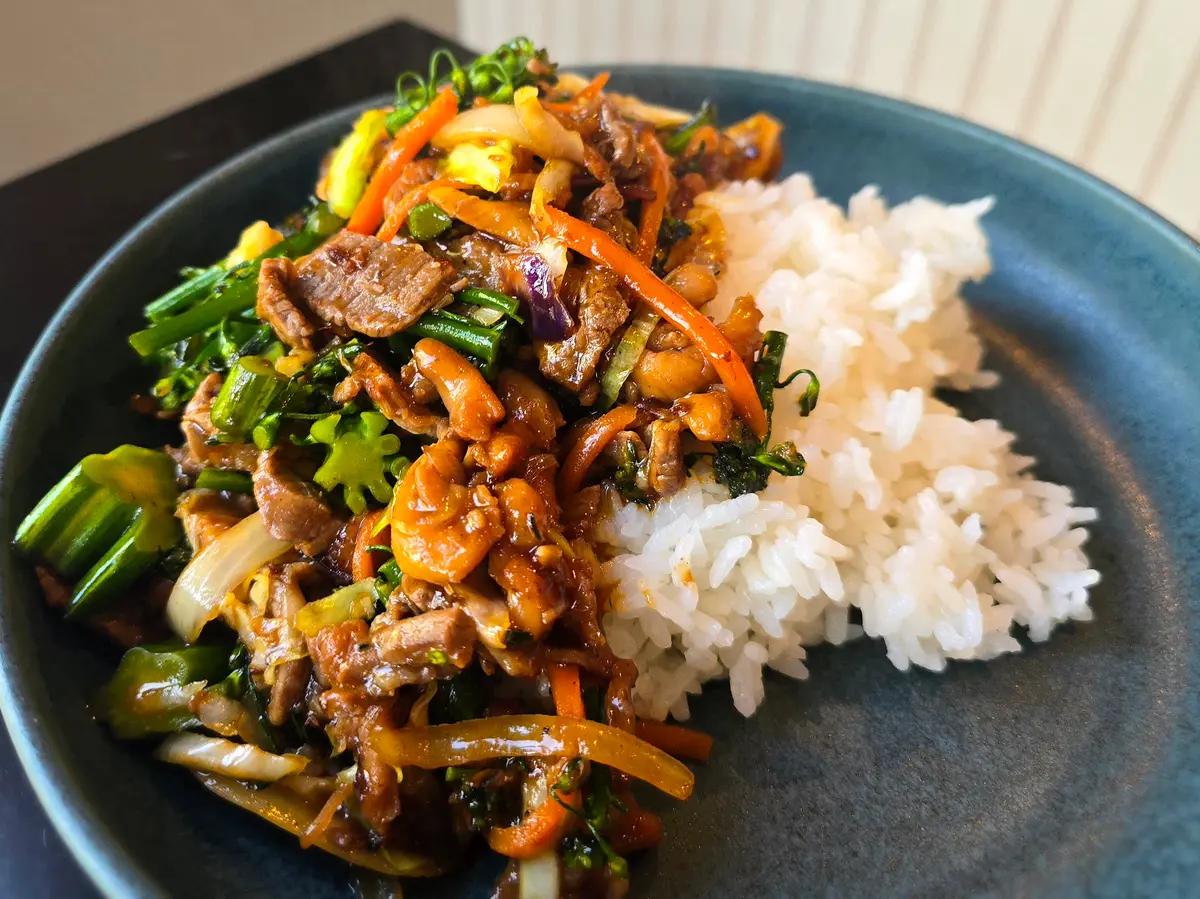
A Lightly Crisp-Bottom Noodle Stir-Fry with Proper Technique and Quiet Roots This is the chow mein I grew up eating — not the kind from a takeout box, but the kind that's built slowly, from good chicken, crisp vegetables, and a sauce that's deep but balanced.
My Family's Chow Mein
There are dishes you discover, and then there are dishes that raise you.
They arrive so often, so naturally, that for years you do not realize they are teaching you anything at all. You think this is simply dinner. You think this is just what chow mein tastes like. You do not yet understand that one day you will leave home, order versions elsewhere, and feel the quiet shock of recognition turned absence. Too soft. Too oily. Too sweet. Too dull. The noodles limp, the vegetables exhausted, the sauce heavy-handed and flat. And only then do you understand that the dish you grew up with was never ordinary. It had standards. It had structure. It had roots.
This is that chow mein.
Not the kind slumped into a takeout box under a tired gloss of sauce. Not the kind that mistakes grease for flavor or quantity for generosity. This is the kind built slowly, attentively, from good chicken, proper noodles, crisp vegetables, and a sauce that knows how to be deep without becoming muddy. It is a dish with restraint, which is one of the least fashionable and most important qualities a cook can have.
Because good chow mein is not chaos.
It is order disguised as abundance.
At first glance, it looks loose, informal, easygoing — noodles tangled with vegetables, bites of chicken tucked here and there, everything shining lightly, invitingly. But underneath that apparent ease is technique. Real technique. Chicken treated properly so it stays tender instead of tightening under heat. Vegetables cooked just enough to keep their color and snap. Sauce measured so it coats rather than drowns. Noodles handled in stages, given their own attention, their own texture, their own moment in the pan.
That last part matters to me especially.
I love noodles that are not merely boiled and tossed, but understood. Noodles that keep some identity. Noodles that carry a lightly crisped underside, a little golden resistance, a reminder that contrast is what makes a dish worth returning to. That is one of the quiet pleasures of this chow mein: it does not collapse into softness. It has life in it. It has edges. It knows that tenderness becomes more interesting when paired with a little chew, a little crispness, a little variation from bite to bite.
So much of family cooking lives in those details.
Not always in written recipes, and not necessarily in grand declarations, but in habits repeated until they become instinct. Heat the pan longer than you think. Don’t crowd the vegetables. Don’t throw in sesame oil too early and waste its perfume. Let the chicken sit long enough to take color before you move it. These are not flashy revelations. They are the accumulated intelligence of people who cooked the same dish enough times to know exactly where care matters most.
That, to me, is what gives home cooking its authority.
It is not trend-driven. It does not care what is photogenic or viral or newly fashionable. It answers to texture, balance, memory, and appetite. It evolves, of course, but quietly, retaining its internal compass. A family dish like this does not survive because it is impressive on paper. It survives because it delivers, over and over again, the kind of satisfaction that cannot be faked.
And satisfaction, in chow mein, is a very specific thing.
It is the smell of ginger and garlic hitting hot oil. The glossy depth of soy and oyster sauce without the weight of excess. The sweetness of cooked onion against the fresher bite of pepper and bean sprouts. The tenderness of velvety chicken beside noodles that still have shape and spring. It is the pleasure of a dish that feels complete — not because it is complicated, but because every part is doing its job.
I think often about how many beloved family foods are “quiet roots” foods.
Not ceremonial holiday centerpieces. Not dishes introduced with speeches. Just the meals that formed a baseline of deliciousness so solid that everything else is judged against it forever after. Chow mein, for me, belongs to that category. It is one of those deceptively simple meals that tells you where you come from not through symbolism, but through repetition. Through familiarity. Through the body’s immediate recognition of what is right.
And what is right here is balance.
Balance between softness and crispness. Between savoriness and freshness. Between sauce and restraint. Between the speed of stir-frying and the slowness of learning how to do it properly. This is not a loud dish, even when it comes out of a ripping-hot pan. Its confidence lies elsewhere. In proportion. In control. In the understanding that when each element is treated properly, the final effect feels effortless — though it absolutely is not.
That is the secret of so much great cooking.
The finished plate rarely advertises the labor of discernment behind it. It simply tastes inevitable, as though it could never have been any other way.
This chow mein tastes like that to me.
It tastes like the version that ruined lesser versions forever. The version that made me realize a noodle dish could be lively rather than leaden, fragrant rather than greasy, textured rather than limp. The version that taught me that family food, when made with care, does not need extravagance to be memorable. It only needs to be true to itself.
And maybe that is why I return to it so often.
Because in a world full of exaggerated food — overstuffed, oversauced, overexplained — there is something deeply moving about a dish that knows exactly what it is. A dish that carries technique without showing off. A dish that feeds generously without becoming careless. A dish that can sit in the center of the table on an ordinary night and still feel, to those who know it, like inheritance.
And like the best family dishes, it does more than fill the plate.
It reminds me what good taste, in every sense of the phrase, actually means.Then there's the wok technique itself — building layers of flavour through proper heat and timing.
Ingredients
- CHICKEN MARINADE
- 1 lb chicken (thighs or breast), sliced thin
- 1 1/4 tsp light soy sauce
- 1/4 tsp dark soy sauce
- 1 tsp Shaoxing wine
- 1/2 tsp kosher salt
- 1/2 tsp sugar
- 1/2–1 tsp cornstarch (*1/2 tsp for thighs, 1 tsp for breast or flank*)
- 1/4–1/2 tsp baking soda (*1/4 tsp for thighs, 1/2 tsp for breast or flank*)
- Pinch of white pepper
- 1 tsp neutral oil (peanut, canola, or grapeseed — no sesame)
- SAUCE
- 3 tbsp dark soy sauce
- 3 tbsp light soy sauce
- 3 tbsp oyster sauce
- 3 tbsp Shaoxing wine
- 1 1/2 tsp freshly ground black pepper
- 2 tsp sugar
- FOR ASSEMBLY
- 1 lb fresh chow mein noodles
- 2 cups mung bean sprouts
- 7 cups total sliced vegetables (suggestions: green and red bell peppers sliced in strips, onion strips, cabbage or coleslaw mix)
- 4 garlic cloves, minced
- 1-inch (2.5 cm) piece of ginger, minced (about 1 tbsp)
- 2 tsp toasted sesame oil (add only at the end)
- Salt and pepper to taste
- About 1/3 cup (80 ml) neutral oil, such as rice bran, peanut, or canola, for frying
Instructions
Chicken Marinade
1Slice 1 lb (454g) of chicken into thin strips. In a bowl, mix in all the marinade ingredients. Stir vigorously with a spoon or your fingers. Let sit for at least 20 minutes while you prep the other ingredients.
Noodle Preparation
2Bring a large pot of water to a boil. Add the chow mein noodles and boil for 60–90 seconds until just loosened. In the last 45 seconds, stir in the mung bean sprouts to blanch them for food safety, since raw sprouts can carry bacteria. Drain immediately and spread the noodles flat on a baking sheet or large platter to cool and prevent clumping. The noodles and blanched sprouts will be mixed together at this point—that's fine. Divide roughly into two equal portions. Let them cool and dry for a few minutes.
Vegetable Stir-Fry
3In a large wok or sauté pan, heat 1–2 tbsp (15–30ml) neutral oil over high heat. Add the vegetables in batches and stir-fry until tender-crisp, 2–4 minutes. Remove and set aside.
Crispy Noodle Cakes
4Heat a heavy nonstick skillet over high heat. (I recommend not doing this step in a wok!) Add 1–2 tsp (5–10ml) of neutral oil, then press one portion of the noodles into the pan in a flat, even layer. Cook for 1½ minutes per side until lightly crisped. Repeat with the second portion. (This replaces traditional wok-frying, which often doesn't get hot enough in home kitchens, leading to sticking and uneven browning.)
Chicken Cooking
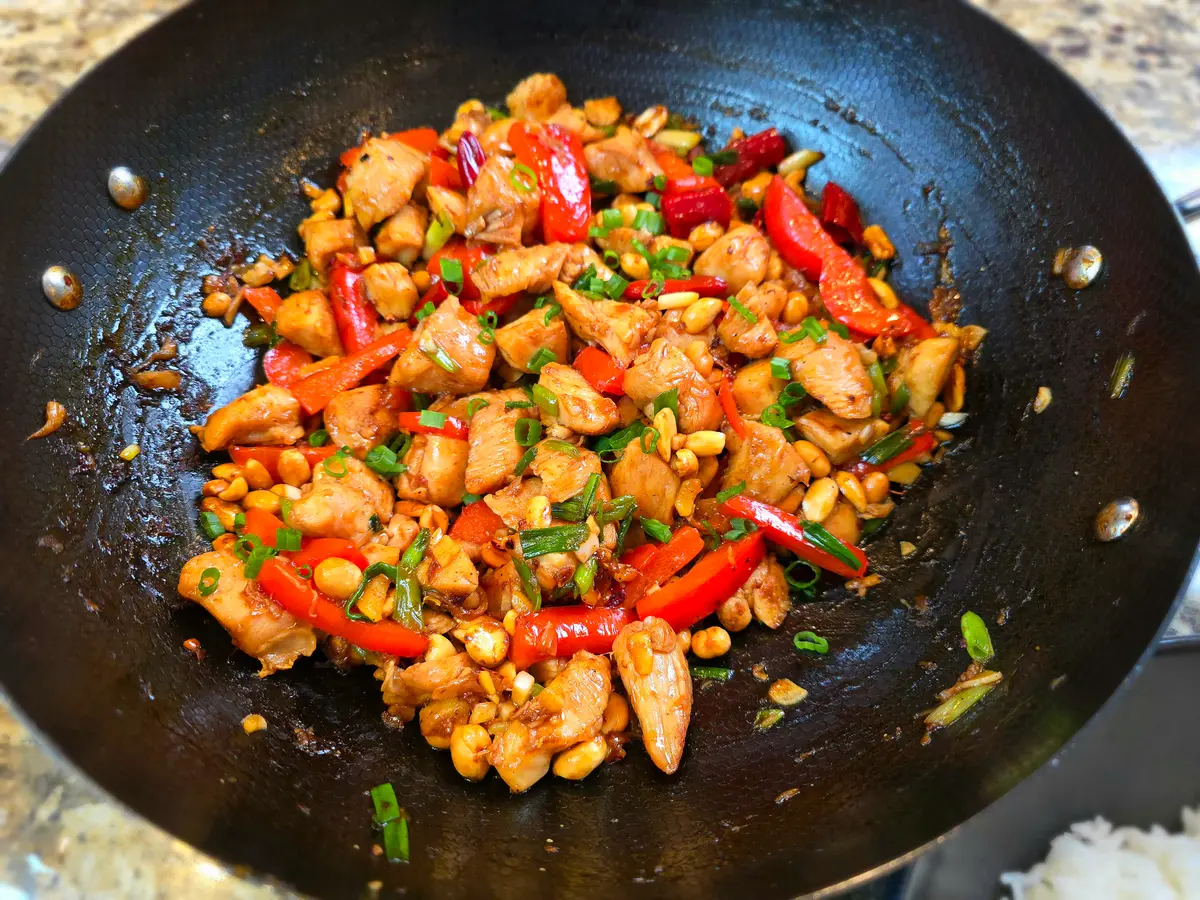
5Add more oil to the wok and heat it on high for a few minutes until very hot. Add the chicken and let it sit for a minute to brown, then flip and stir-fry the marinated chicken until mostly cooked through, about 3–4 minutes. If the wok gets dry or starts to stick, deglaze with a splash of Shaoxing wine and scrape up the flavorful bits.
- 6
Reduce the heat to medium-high. Make a well in the centre and add the garlic and ginger. Stir-fry briefly for 10–15 seconds until fragrant. Toss everything together.
Assembly
7Add the crisped noodles and cooked vegetables back to the wok. Pour in the sauce and toss everything together until evenly coated and heated through, about 1–2 minutes.
- 8
Once off the heat, drizzle in 2 tsp (10ml) toasted sesame oil and toss to finish. Add the sesame oil only after removing the wok from the heat to preserve its aroma. Serve immediately.
FAQ
Did you try this recipe?
Leave a star rating — it helps other cooks find it!
Comments
Looking for more? Explore the full collection — filter by lifestyle, cuisine, or dietary needs.