Mennonite Cabbage Borscht — A Quintessential Prairie Soup
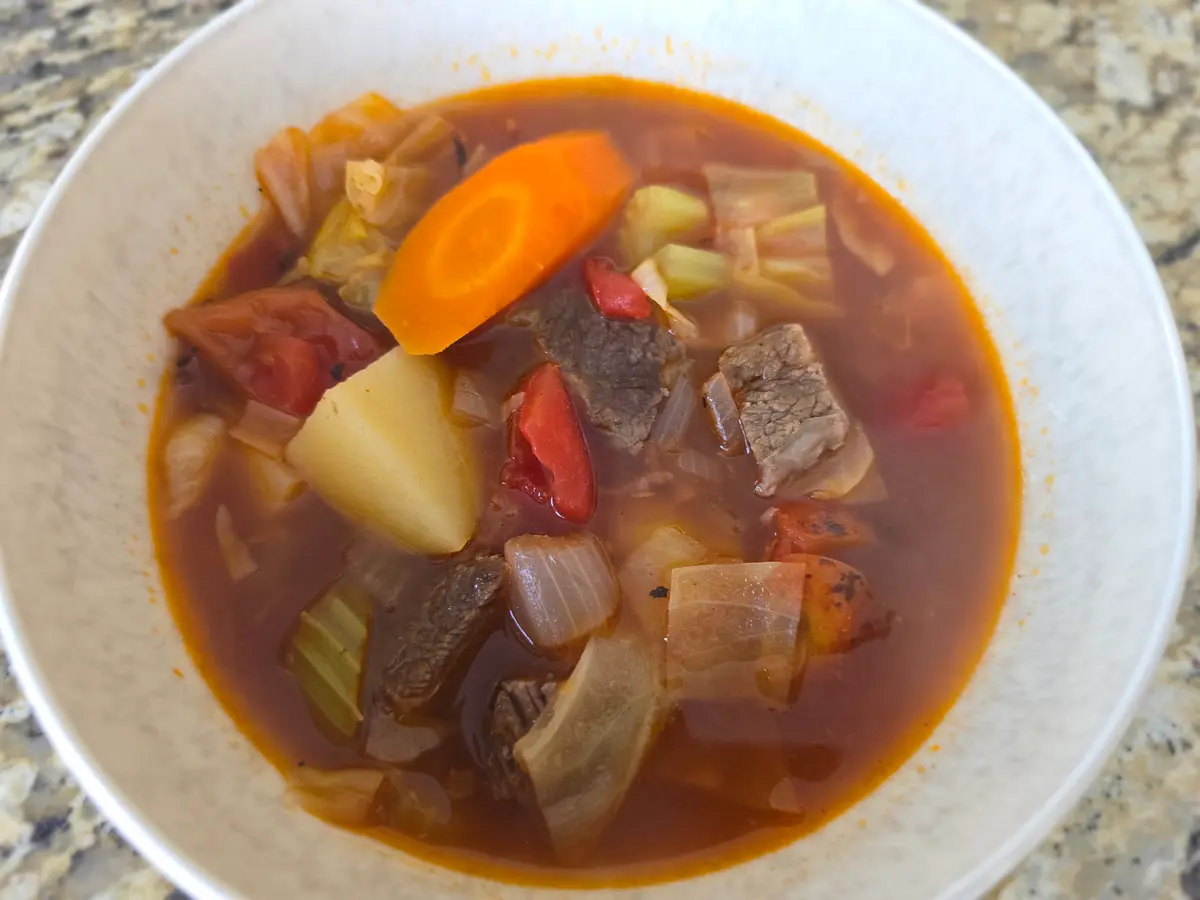
This Mennonite cabbage borscht is a quintessential Prairie soup—beefy, cabbage-forward, and deeply comforting. A true bread-and-butter classic.
Tap to rate this recipe
There are soups that try to impress you… and then there are soups that quietly stay with you for years.
This Mennonite cabbage borscht belongs firmly in the second category.
If you grew up anywhere across the Canadian Prairies — church basements, community halls, family kitchens where a big pot simmered on the stove — you know this bowl. It isn't flashy. It isn't trendy. And it certainly isn't the bright beet borscht many people picture.
Instead, this is the deeply comforting Prairie original: beefy, tomato-backed, cabbage-forward, and gently sweet from long cooking. It's the kind of soup that tastes like home — whether that home is in Manitoba, Saskatchewan, or Alberta, or whether you're discovering it for the first time.
What Makes This a True Prairie Soup
Before we cook, it helps to understand what this soup is not.
This is not:
- beet borscht
- diet cabbage soup
- sausage-heavy stew
- or a trendy, herb-loaded restaurant potage
A proper Mennonite cabbage borscht is defined by restraint and balance.
Key Prairie characteristics:
- Beef is deeply browned for flavor
- Cabbage cooks until silky and sweet
- Tomato supports the broth but never dominates
- Vegetables are cut generously, not dainty
- Seasoning is warm and subtle
- The broth stays spoonable and bread-friendly
It's humble food — but technically very smart.
What This Soup Should Taste Like
When it's right, you'll notice:
- Beefy depth without heaviness
- Soft, sweet cabbage (never crunchy)
- Tomato present but not obvious
- Paprika providing quiet warmth
- A broth that lightly coats the spoon
- A strong urge to reach for bread
If your first thought is:
> "Oh… this tastes like the Prairies."
—you nailed it.
Food400 Notes (Important)
- Do not add barley. This soup is designed to stay brothy and bread-friendly.
- Do not rush the browning step. That's where the magic lives.
- Do not over-spice. Prairie soups succeed through restraint.
- Leftovers are excellent. Day two is often even better as the cabbage softens further.
Why This Soup Still Matters
In a world full of overbuilt, over-seasoned soups, Mennonite cabbage borscht reminds us that comfort doesn't require complexity — just good technique, patience, and respect for simple ingredients.
It's the kind of pot that feeds a family, warms a kitchen, and quietly earns its place at the table.
And honestly?
Every Prairie kitchen deserves a version of this simmering on the stove at least once each winter.
🍳 Needed Gear
Ingredients
- 2 lb beef chuck or blade roast, cut into 2 cm cubes
- 2 tbsp neutral oil
- 1 large yellow onion, diced
- 1 large leek (white and light green parts), sliced
- 2 cloves garlic, minced
- 3 medium carrots, sliced
- 2 ribs celery, sliced
- 2 medium Yukon Gold potatoes, diced
- 500–600 g green cabbage (about 1/2 medium head), chopped into bite-size pieces
- 1 lb canned diced tomatoes (about 1 1/2 cups , with juice)
- 2 tbsp tomato paste
- 1.4 litres (6 cups) beef broth (preferably low-salt, real broth)
- 2 bay leaves
- ½ tbsp sweet paprika
- ¾ tsp kosher salt (start here, adjust to taste)
- ½ tsp freshly ground black pepper
- Optional but very authentic (choose one)
- 0.0 tsp allspice, or
- 0.0 tsp caraway seed
- To finish
- Fresh dill, chopped
- Sour cream, for serving
Instructions
- 1
Heat the oil in a heavy pot over medium-high heat. Brown the beef in batches until deeply caramelized. Do not rush this step — it is why the soup tastes like Tall Grass. Remove the beef and leave the fat in the pot.
- 2
Lower the heat to medium. Add the onion and leek with a pinch of salt. Cook for 6–8 minutes until soft and lightly golden. Add the garlic and cook for 30 seconds. Stir in the tomato paste and cook for 2–3 minutes until it is brick-red and fragrant.
- 3
Add the diced tomatoes, scraping the bottom of the pot well. Return the beef to the pot. Add the beef broth, bay leaves, paprika, pepper, and optional allspice or caraway. Bring to a gentle simmer, partially covered, for 45 minutes.
- 4
Add the carrots, celery, and potatoes. Simmer for 15 minutes. Add the cabbage and salt. Simmer for another 20–25 minutes, uncovered, until the cabbage is silky, the potatoes are tender, and the broth tastes unified, not sharp. Adjust the salt.
- 5
Remove the bay leaves. Taste the soup — it should be savoury, gently sweet, and deeply comforting. Finish with fresh dill. Serve with a dollop of sour cream and crusty bread.
Questions, Comments & Compliments
FAQ



Looking for more? Explore the full collection — filter by lifestyle, cuisine, or dietary needs.