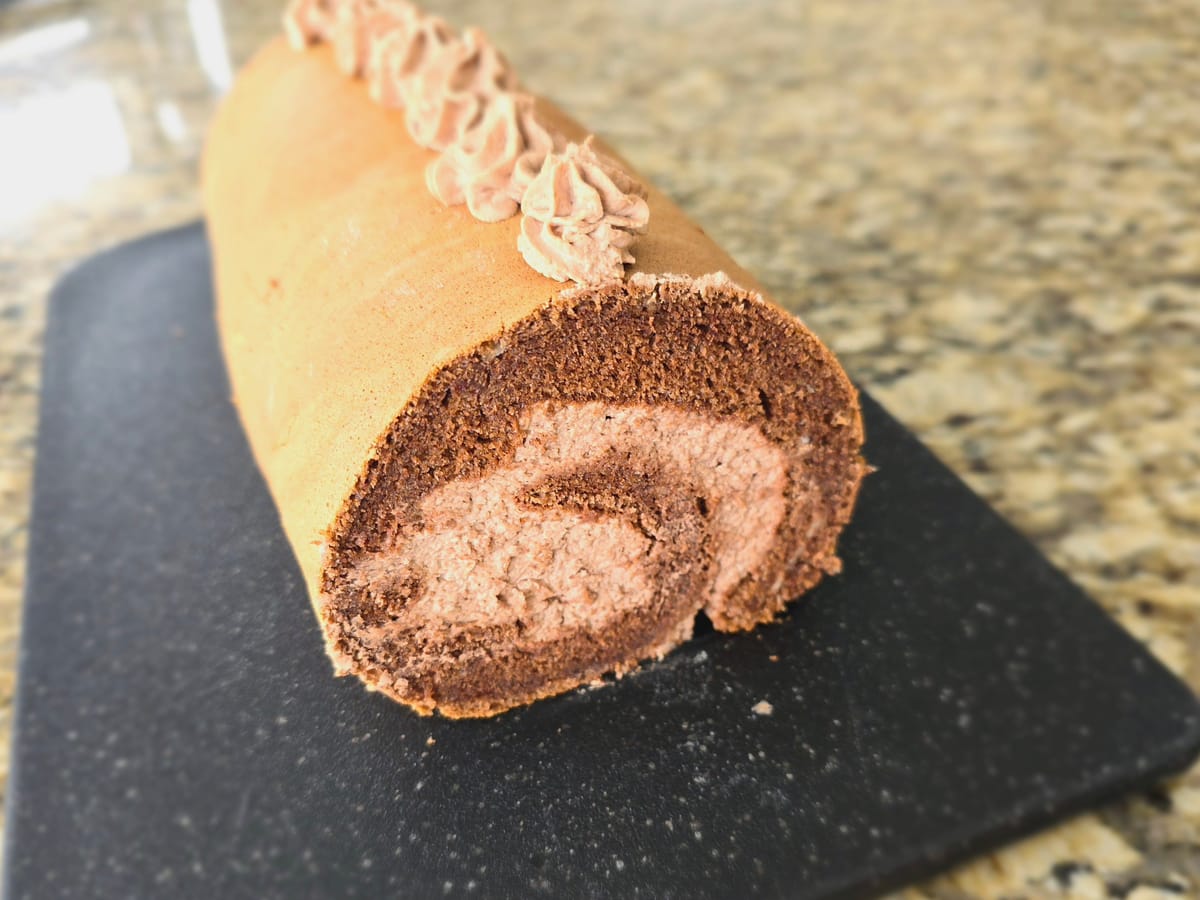
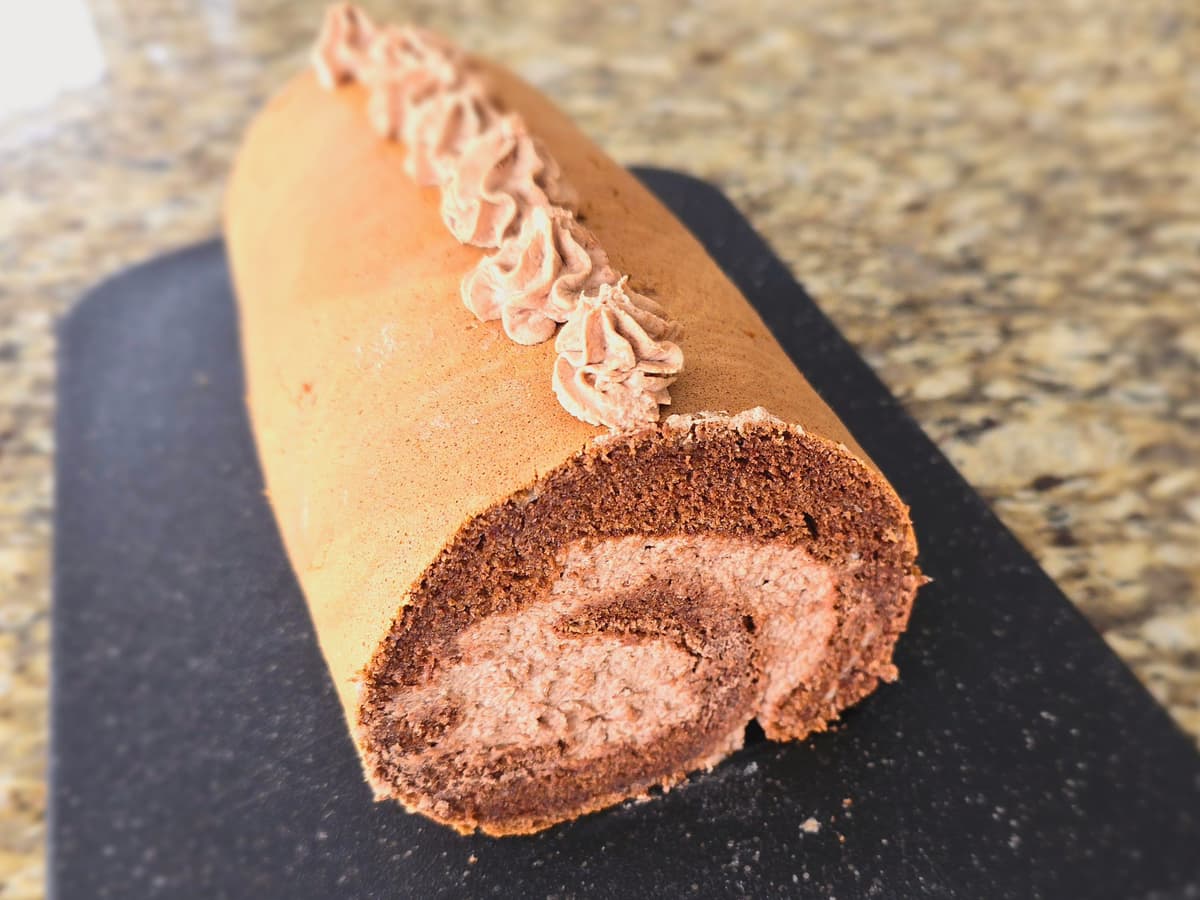
Japanese Cake Roll
This recipe has a lot of steps but by no means is difficult. Once you remember the process, this cake is easy and quick to make and it's so easy to change up and make different variations (matcha, lem
This recipe has many steps, but it is by no means difficult. Once you remember the process, this cake is easy and quick to make, and it is so easy to change up and make different variations (matcha, lemon, strawberry, raspberry, etc.).
To my surprise, this is my husband's favourite cake. Light as air, delicate, and simply delicious!
Ingredients
- For the Cake
- 1/3 cup plus 2 tbsp cake flour (about 45g total)
- 1/4 tsp baking soda
- 1/4 tsp cream of tartar
- Scant 1/4 tsp fine salt
- 3 egg yolks
- 1/4 cup (50g) sugar
- 2.5 tbsp oil (40 ml)
- 1/4 tsp vanilla extract (1.25 ml)
- 3 tbsp milk (50 ml)
- For the Meringue
- 4 egg whites
- 1/2 tsp cream of tartar
- 1/3 cup (65g) sugar
- For the Filling
- 1 1/4 tsp powdered gelatin (about 4g)
- 5 tsp water (25 ml)
- 1 1/4 cup heavy cream (300 ml)
- 1 1/2 tbsp granulated sugar (19g)
- Pinch of fine salt
- 1/2 tsp vanilla extract (2.5 ml)
- 1/3 cup fresh raspberries or quartered strawberries (about 55g)
Instructions
- 1
Preheat the oven to 325°F (160°C). Grease lightly and line the bottom of a 9×13 inch (23×33 cm) baking pan with parchment.
- 2
When you separate your egg yolks and egg whites, please note that if an egg yolk breaks and gets into your whites, they will not whip up properly and the cake will not turn out well. For this reason, I suggest separating each egg over a small bowl and then transferring it to separate yolks and whites bowls. If an egg yolk happens to break and leak, do not use it. Reserve it for an omelet or another use.
- 3
Measuring the flour correctly is very important. Spoon the flour into the cup measure and shave off the excess flour with a butter knife without compressing it into the cup measure. Flour is very compactable, so if you simply scoop it out of the bag instead of spooning it in, you will end up with much more flour than needed and will turn this delicate cake into a dense one. So do not skip this extra step.
- 4
Sift the flour, baking soda, cream of tartar, and salt into a small bowl.
- 5
Beat the egg whites with a whisk attachment of your stand mixer on medium-high speed until frothy, about 2 minutes. Add the cream of tartar and continue whipping until soft peaks form, about 3 minutes. Gradually add the sugar with the mixer running on medium speed. It is crucial to add the sugar slowly for the meringue to form properly; do so over a period of about 2 minutes. Beat until you reach medium-stiff glossy peaks, around 3 minutes. Do not overbeat. When the meringue is overbeaten, it won't be smooth.
- 6
Whisk the egg yolks with sugar until thickened, for about 3–4 minutes. Pour in the oil and vanilla while whisking. Then add the milk and whisk to combine.
- 7
Sift the dry ingredients into the egg yolk mixture and gently fold them in until combined; do not overmix.
- 8
Gently fold 1/3 of the whipped egg whites into the egg yolks with a whisk; this will lighten the batter and make it easier to fold in the rest. Fold in the remaining egg whites into the yolk mixture with a rubber spatula. Only fold until uniform in colour and combined; do not fold any more than necessary. Spread the batter evenly into the prepared pan.
- 9
Bake in the preheated oven for about 13–14.5 minutes. The cake should spring back in the center when gently pressed.
- 10
Remove from the oven and allow to cool for about 5 minutes. Run a butter knife around the edge between the cake and the baking pan. Invert the cake onto a piece of parchment paper placed on top of cooling racks. Gently remove the parchment that was on the bottom of the cake—this side will become the top of your roll. Allow the cake to cool on the racks for about 5 minutes, but not much longer. Then invert it onto a clean piece of parchment paper and roll it into a roll, making sure the parchment is between the cake to prevent it from sticking. Allow it to cool completely in this shape (doing so will prevent it from cracking).
- 11
To make the stabilized whipped cream, bloom the gelatin by combining it with water and letting it sit for about 5 minutes until thickened. In a separate bowl, begin whipping the heavy cream with the sugar, vanilla, and salt until it reaches soft peaks—then pause.
- 12
Meanwhile, gently melt the gelatin mixture in the microwave in short bursts (about 10 seconds at a time) until fully dissolved and fluid, but not hot. Let it cool for 30 to 60 seconds, just until it is lukewarm and no longer steaming.
- 13
To temper the gelatin, stir in 2 to 3 tablespoons (30–45 ml) of the partially whipped cream and whisk until smooth and fully blended. Then, with the mixer running on low speed, slowly pour the tempered gelatin mixture back into the bowl of cream. Increase the speed to medium and continue whipping until medium to stiff peaks form.
- 14
Unroll your cooled cake. Spread the stabilized whipped cream evenly over the cake. Lay the raspberries or strawberries evenly on top of the cream.
- 15
Carefully roll up the cake. Wrap in plastic wrap and chill for at least 1½ hours in the fridge.
FAQ
Did you try this recipe?
Leave a star rating — it helps other cooks find it!
Comments


Looking for more? Explore the full collection — filter by lifestyle, cuisine, or dietary needs.