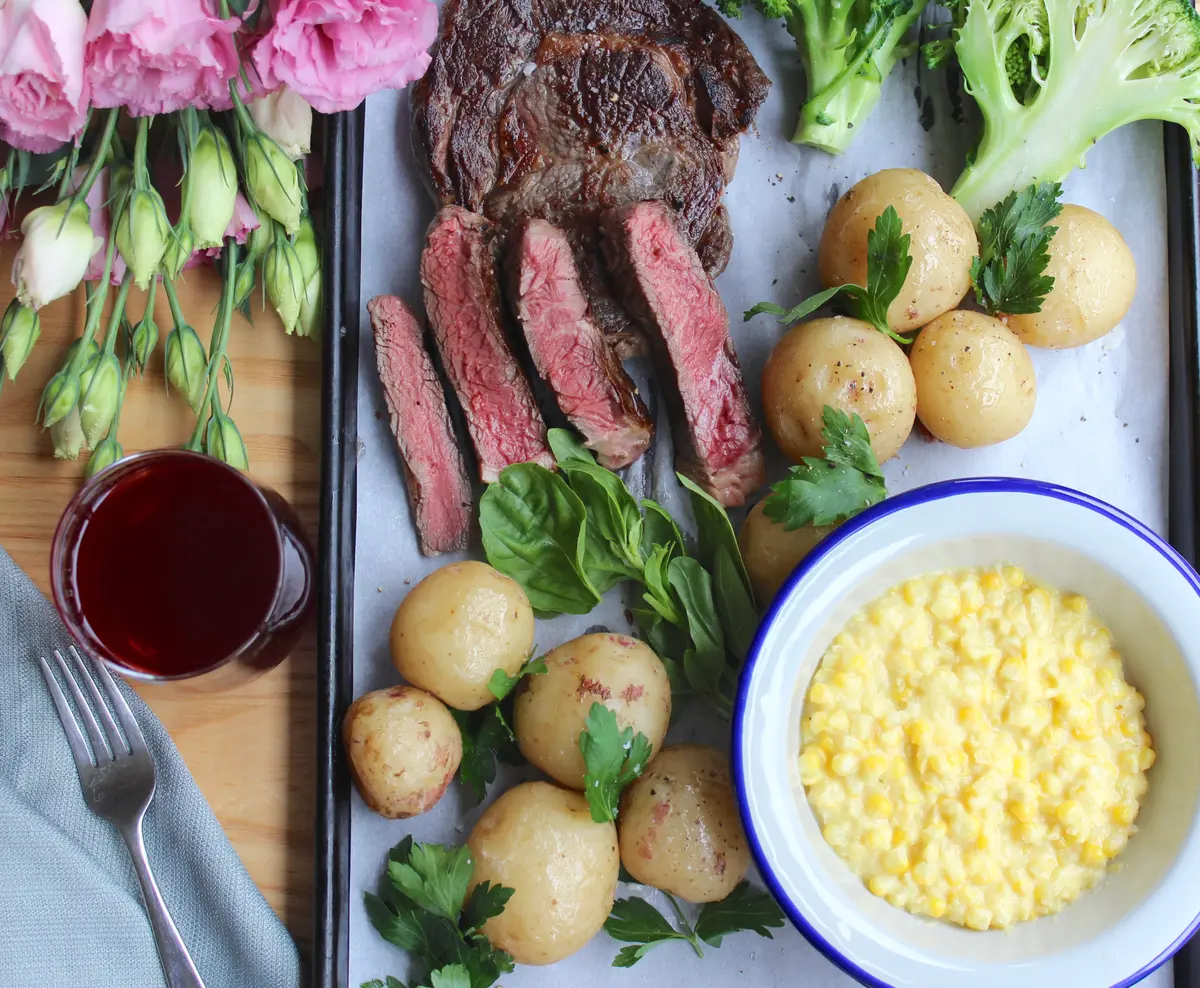
Perfect Ribeye: Tips and Techniques for a Restaurant-Worthy Steak 🥩
I'll walk you through my foolproof method for cooking a restaurant-quality ribeye steak at home, every single time.
You've just picked up a beautifully marbled, high-quality ribeye steak—now the pressure's on. How do you cook it perfectly without risking overcooking or under-seasoning? Don't worry! This guide is packed with helpful tips and techniques to make sure you nail it every time.
For today's recipe, I used a grass-fed ribeye. Grass-fed beef has a distinct texture and a meatier, slightly gamier flavor compared to corn-fed beef. I personally love its robust taste, but if it's not your preference, feel free to use any well-marbled ribeye you have on hand. The principles remain the same!
Key Tips for the Perfect Ribeye
- Dry the Steak ThoroughlyBefore cooking, pat the steak dry with paper towels. This step is crucial for achieving that beautiful crust because browning only happens after the surface moisture has evaporated. If the steak is too wet, it will steam instead of searing, which means you'll miss out on that delicious caramelized exterior.
- Season and RefrigerateIf you have time, season your steak with kosher salt and place it on a wire rack in the refrigerator, uncovered, for 1-24 hours. This process helps draw out excess moisture and concentrates the beefy flavor. It's an optional step, but one that elevates the steak to a new level!
- Preheat the Skillet ProperlyYour skillet should be very hot before the steak goes in. Heat it for at least 3-4 minutes until it's shimmering. A hot pan is essential for a quick, even sear that locks in flavor.
- Don't Overcrowd the PanCrowding the pan leads to steaming instead of searing. If you're cooking multiple steaks, do it in batches to ensure that each steak gets that perfect, golden-brown crust.
- Sear Without DisturbingOnce you place the steak in the pan, let it sear undisturbed for about 3 minutes. This will allow a delicious crust to form before flipping it over.
- Finish in the OvenAfter searing, transfer the steak to a low-temperature oven (around 250°F). This slow and gentle cooking method ensures the interior cooks evenly while keeping that beautiful crust intact.
Ingredients
Instructions
- 1
Dry the surface of the steak with a paper towel, generously salt each steak with kosher salt, place on wire racks and refrigerate uncovered for 1–24 hours. This step is optional but will help add extra moisture and flavour to the steak. If you don't have time to do this, dry each steak with paper towels and salt right before proceeding to the next step.
- 2
Preheat the oven to 250°F (120°C). Heat a large heavy-bottomed skillet (ideally cast iron) over medium-high heat for at least 3–4 minutes until very hot and shimmering. Add oil to the skillet. Place your steaks into the skillet and cook without disturbing them for around 3 minutes, until they have a nice golden-brown and crusty exterior. Gently sear the sides of the steak as well. Be sure not to overcrowd the pan; cook in batches if necessary. Slide the butter under each steak until melted, then flip, baste the steak with melted butter so it's glistening, and move the whole skillet into the oven.
- 3
Do not walk away—it won't take long. For smaller steaks, it was just under 3 minutes. A medium 1–1.5" (2.5–4cm) steak may take around 5–6 minutes. But even for a large 2" (5cm) tall ribeye, it should not take more than 12 minutes or so. Measure the internal temperature of the steak with an instant-read thermometer to reach your desired doneness. I personally prefer to take my ribeye steaks out at 140°F (60°C), knowing that the temperature will still rise a few degrees. But follow your preference as well as pay attention to government-suggested guidelines.
- 4
Remove the steaks from the oven, transfer to a cutting board, tent loosely with aluminum foil, and rest for 5–7 minutes. Then slice and enjoy!
FAQ
Did you try this recipe?
Leave a star rating — it helps other cooks find it!
Comments




Looking for more? Explore the full collection — filter by lifestyle, cuisine, or dietary needs.