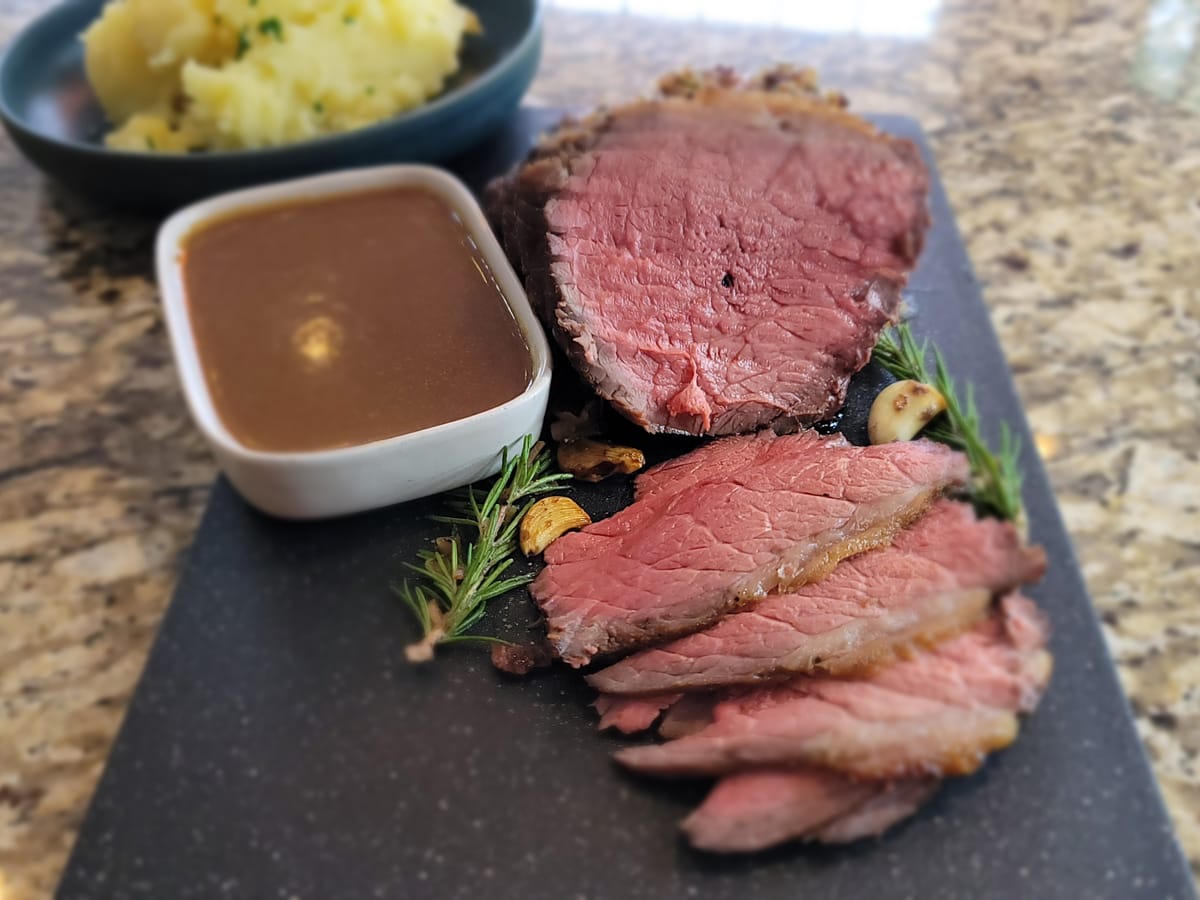
Roast Beef Recipe
Cooking your roast beef low and slow eliminates the possibility of that gray discoloured meat around the edges and ensures that your meat is cooked to your desired temperature from edge to edge.
Cooking your roast beef low and slow eliminates the possibility of that gray, discoloured meat around the edges and ensures that your meat is cooked to your desired temperature from edge to edge.
Ingredients
- 3–4 lb (1.4–1.8 kg) top sirloin roast, aka spoon roast (or another roast cut of choice)
- 2 TBSP (30 ml) olive oil
- 8 garlic cloves
- 1 heaping tsp (6 g) kosher salt
- 1/2 tsp (2.5 g) freshly ground black pepper
- 1/2 tsp (1.5 g) paprika
- 1/2 tsp (1.5 g) onion powder
- 1/4 tsp (0.5 g) garlic powder
- 1/4 tsp (0.3 g) thyme
- 1/8 tsp (0.3 g) oregano
- 1/8 tsp (0.3 g) chili powder
- 1 1/2 TBSP (15 g) cornstarch
- 1/4 cup (60 ml) cold water
- 1 1/2 cups (360 ml) beef broth
- 1 TBSP (14 g) butter
- Salt to taste
Instructions
Prepare and Roast Beef
1Remove the roast from the fridge at least an hour before roasting. Pat it dry with paper towels. Rub with olive oil and season with your seasoning mix. Make small cuts in the meat and insert the garlic cloves into the incisions. Ideally, refrigerate the roast covered overnight—this will allow those flavours to absorb into the meat. But you can proceed to the next step immediately, if desired.
- 2
Preheat the oven to 425°F (220°C). Place racks inside your roasting pan. Place the roast on top of the racks, fatty side up. Bake in the preheated oven, uncovered, for 15 minutes—this will nicely brown the beef. Then reduce the oven temperature to 225°F (107°C) to roast low and slow.
- 3
I don't go by the suggested cooking time but rather rely heavily on internal thermometers for accuracy. For a 3-lb (1.4 kg) roast, I find the average cooking time is about 1.5 hours, but it really depends on the shape of the roast. The roast in the pictures is taken out of the oven at 140°F (60°C). I would suggest taking the roast out between 135°F (57°C) and 145°F (63°C), depending on preference (135°F is considered medium-rare, while 145°F is considered medium). Remove the roast from the oven and from the roasting pan, cover loosely with foil, and allow it to rest for 15 minutes. It's very important to allow the meat to rest!
Gravy
4In the meantime, set the roasting pan over medium heat. Add the stock and cook, scraping the bottom of the roasting pan until slightly reduced. Make a cornstarch slurry by mixing cornstarch with water, and add it to the pan while stirring. Cook until the gravy thickens slightly. Add the spices. Taste and adjust the seasoning. Strain into a serving bowl. Add the butter and stir vigorously.
- 5
Slice the beef thinly and serve with the gravy. Enjoy!
- 6
Chef's Tips
This low-and-slow roasting method works beautifully with a variety of beef cuts. Here's what you need to know:
Fattier Cuts: If you're using a fattier cut like Prime Rib or Ribeye, you can aim for a slightly lower target temperature since the fat will help keep the meat moist and tender. Try pulling these at 130–135°F (54–57°C) for medium-rare.
Leaner Cuts: Leaner roasts like Beef Tenderloin, Bottom Round, or Shoulder Petite can dry out more easily. Cook these to no higher than 135°F (57°C) and consider reducing your oven temperature to 200°F (93°C) for an even gentler cook.
Other Great Cuts for This Method: - Beef Tenderloin: Premium, very tender, cooks quickly - Prime Rib: Luxurious and forgiving, excellent flavour - Ribeye Roast: Well-marbled, stays juicy - Shoulder Petite: Budget-friendly, needs slightly longer cooking - Tri-Tip: Flavourful, leans toward medium-rare - Bottom Round: Economical, lean—watch the temperature carefully
The beauty of using a meat thermometer is that you have complete control. Don't rely on cooking times alone; every roast is unique, and shape, size, and starting temperature all affect how long it takes. When in doubt, cook low and slow, check often, and you'll nail it every time.
FAQ
Did you try this recipe?
Leave a star rating — it helps other cooks find it!
Comments
Looking for more? Explore the full collection — filter by lifestyle, cuisine, or dietary needs.